

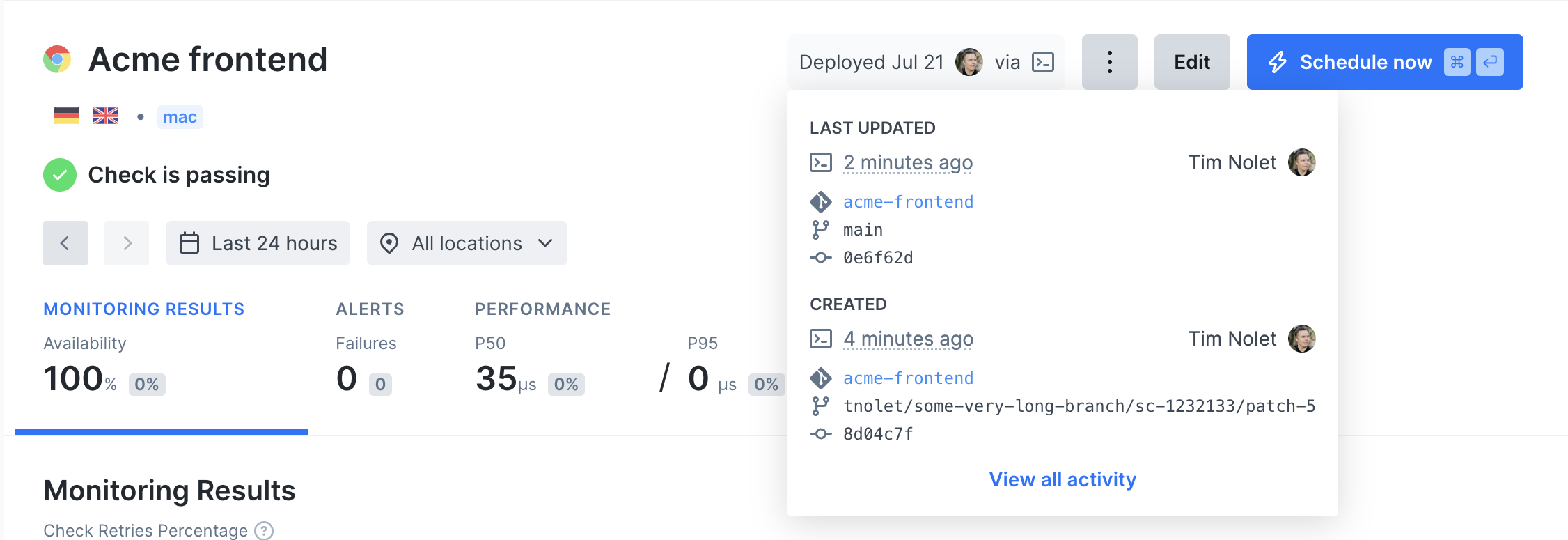
branch, commit sha, owner and more when executing the test --record and deploy commands. This way you can keep track of
your test sessions and deployed resources in the UI and cross-reference them with any updates to your code.
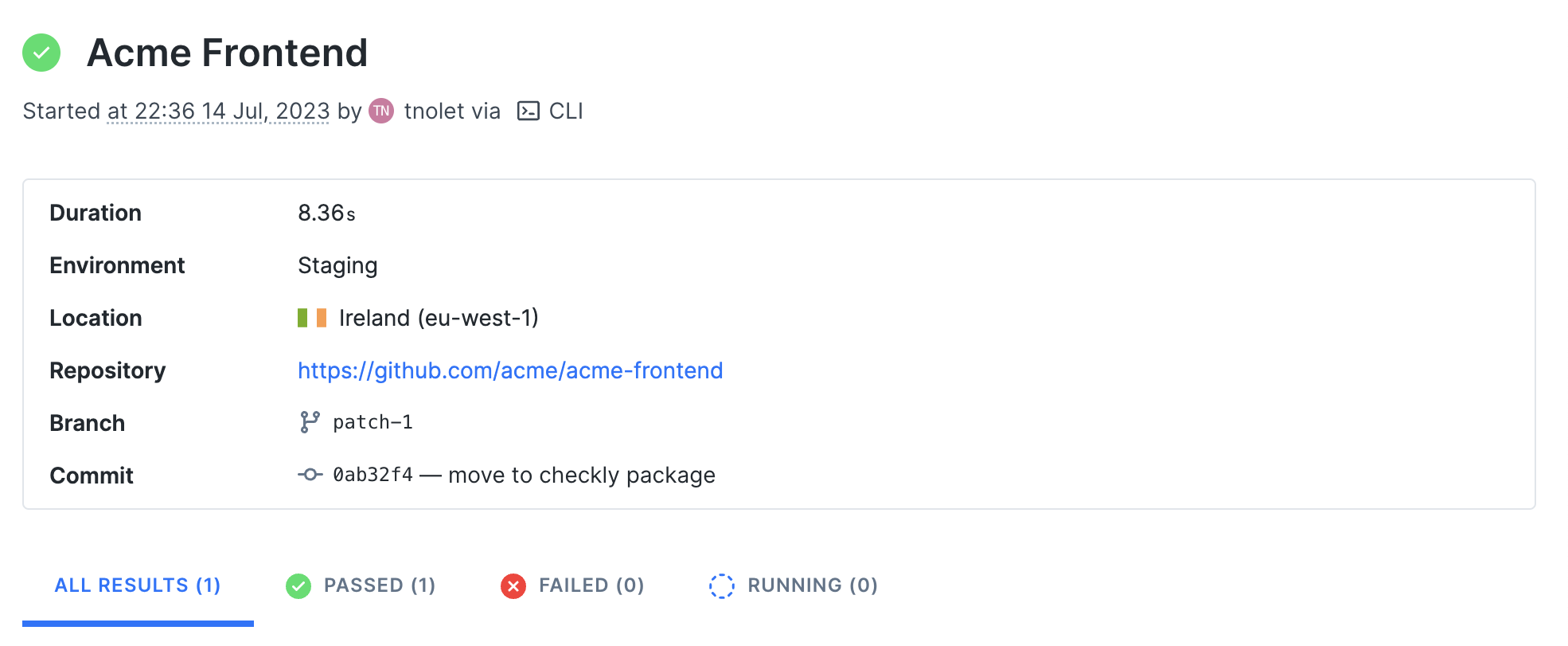
For example, in the screenshot below we ran a test session from our CI server after the project was deployed to our
Staging environment with the npx checkly test command.
npx checkly deploy.
Environment variables
The CLI will attempt to auto-detect and parse git specific information from your local machine or CI environment, but you can also set these data items specifically by using environment variables.
For example, if you want to specifically set the Environment you invoke:
Terminal
Terminal
Working with multiple repositories
Eachcheckly test --record or checkly deploy run attaches one repository URL. If your checks live in more than one repository, for example a backend and a frontend repository, give each repository its own Checkly project: a checkly.config.ts with a unique logicalId and its own repoUrl.
checkly.config.ts
logicalId. A deploy deletes the checks in the project that its code does not declare, so the second repository’s deploy removes the first one’s checks.